Clubbable Calcutta and Coal-fired comforts

East-west rivalries exist in many places – New York vs. LA; Sydney vs. Perth, and of course in Scotland, Edinburgh vs. Glasgow. In Scotland the differences were highlighted in the 80s when Glasgow adopted a burly double-entendre of a slogan designed to muscle it‘s way towards the top as Scotland‘s premier city (“Glasgow’s Miles Better”/”Glasgow Smiles Better“). Edinburgh’s pithy response was “Och yes, but Edinburgh’s slightly superior…””

There’s something of that going on between Calcutta and Delhi. The latter is a city on the make (see previous post) and definitely wants you to know it. There’s a sense of pushiness about the way the city portrays itself and acts.

Calcutta, on the other hand, doesn’t feel the need to push it’s case. It has a more languid feel to it with a rich Bengali cultural tradition, a coterie of important families still with some vestiges of power and influence, and some of the elitist Raj institutions having segwayed silkily into the hands of upper Bengali society.

I managed to sneak into one of those institutions, the Bengal Club, during my week there. No-one seemed the least bit fazed as I wandered through in cargo pants and a t-shirt asking for directions to the Reynolds Room on the first floor.
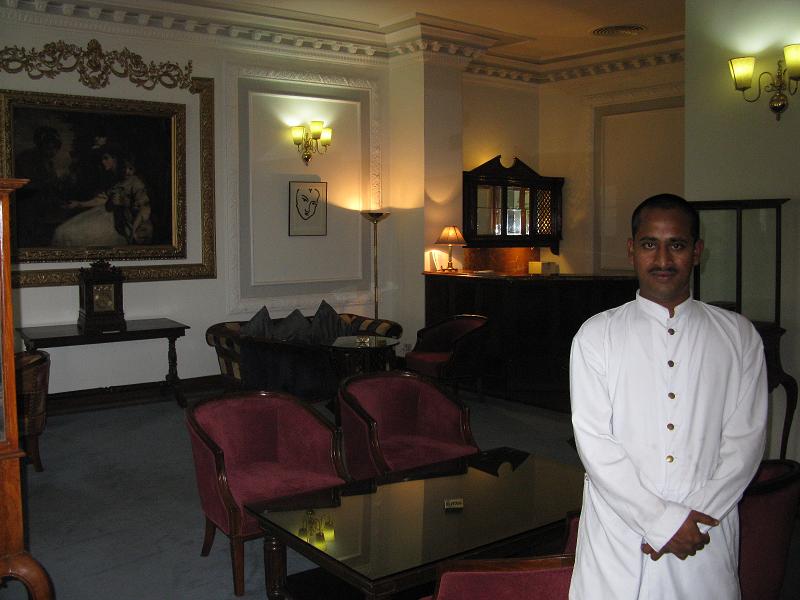
(I sat there for 30 minutes reading my book under the watchful eye of the fortune-teller in Reynolds‘ famous painting, completely undisturbed. Although the waiter was a little bemused).

As I left, I took a look at the notice board. Alongside an admonition form the President (apparently members have been giving tips staff, which is a strict no-no), there was a list of the latest additions to the reading material of the club. Blow the fiction list (Jack Higgins’ and John Grisham‘s latest, Sophie Kinsella’s Shopaholic & Baby, and Vikas Swarup’s Slumdog Millionaire) was the non-fiction list, which made quite interesting reading:

RED HAMMER OVER CALCUTTA UNIVERSITY – Santosh Bhattacharya
BARACK OBAMA – THE NEW FACE OF AMERICAN POLITICS – Martin Dupuis
GABRIEL GARCIA MARQUEZ: A LIFE – Gerald Martin
DREAMS FROM MY FATHER – Barack Obama
THE RISE, DECLINE AND FUTURE OF THE BRITISH COMMONWEALTH – Krishnan Srivanasan

Each says something interesting about the concerns and interests of Club members. In particular, items 2 and 4 reminded me of the daily front-page drama in the newspapers here when I first arrived in November. The question of when Obama would call the Indian Prime Minister verged on a national obsession.

I enjoyed Calcutta immensely for many reasons, but the rising heat (and my consequent increasingly sweat-sodden state) made the siren-call of the “Queen of hill-stations” Darjeeling easy to cave in to.

My 16th Indian train journey brought me to the flats of West Bengal. From there, the famous Darjeeling toy-train creeps up 80km in distance and 6000 feet in height over 6 long hours, with some engineering contortions that are all the more spectacular for having been constructed in the 1921.

Slowly, everything morphs. Faces become more Nepalese/Tibetan in look; predominantly western clothing betrays both the shift towards a more Buddhist culture and the wealth that has come from tourism; and the weather, well, the weather becomes more… Scottish. The only thing that definitely didn’t change was the injudicious use of the horn. As the railway and the road vie with each other for space on precarious hill-side cuttings, our driver had no hesitation in honking for India.
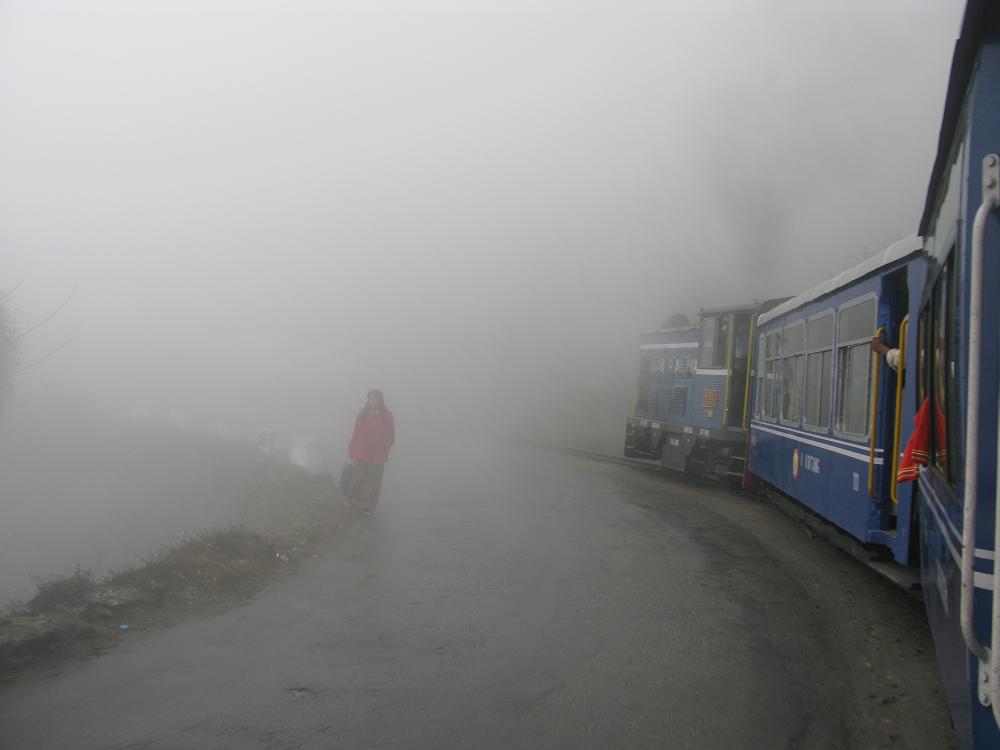
As we reached the height of Ben Nevis, we were suddenly hit by a thick pea-souper that would put the Bengal Club’s Mulligatawny to shame. With visibility down to a matter of yards, I was suddenly glad of that horn-use. The disappointment of missing out on the normally magnificent views was offset by the beauty of the drops of condensation clinging to the rhododendrons and pine trees along the route.

As the train pulled into Darjeeling station, the rain started to fall heavily. I recalled something in one of the guidebooks about rooms with coal fires. It was too good to pass up.

I therefore now write this from a room on the Planter’s Club of Darjeeling (room rate plus 50 rupees temporary membership, plus 120 rupees per bucket of coal), on my handy (tiny) new net-book computer, with a roaring fire in front of me. “Aye. No bad, pal…” as we say in Scotland.

There’s more to write about Calcutta in due course, including a meeting with a remarkable 80-year-old professor in Calcutta. You can read about him here. I was lucky enough to be given a tip that he might be an interesting interviewee, and so it proved.

Sikkim next.
Leave a comment

Filed under 'mind the gap' journey 08-09, All posts, India '08-'09, North India

Calcutta Chronicles Part 3: Marriage Advice and a journey into Jute

[continued from previous post]

No. 2 Lee Road

From the Kali Temple, I jumped in a taxi for Lee Road. The bloody sacrifice I had just witnessed had made me think that I might be running around like a headless… goat. (It’s quite a sight I can tell you. Not for the squeamish).

But persistence is the name of the game, and I was full of hope that I might find something at the house where my grandparents spent their last few years in Calcutta.

As we turned into Lee Road half an hour later, my heart sank. Looking up the street, all I could see were large office buildings and shopping complexes. It all felt a bit depressing.

Nevertheless, I wanted to explore. I asked the driver to pull over and walked up towards a busy junction at the top pf the road

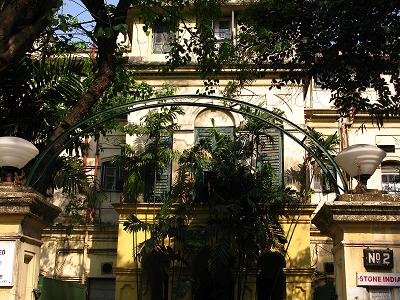
I walked past Number 4, a three storey office block for the ITC, a large Indian conglomerate that has expanded beyond its tobacco origins. Then Number 2 crept into view. There it was – set back from the road behind some trees was a crumbling period building, the house where my grandparents lived, still standing.

I walked through the gates and in through the ornate wooden doors, climbing a wide staircase past dusty-looking office doors that showed little sign if life. I reached the top floor. It was marked “ITC Transit Flat”. I rang the bell.

The door was opened by a (justifiably puzzled) Indian man. It took a few minutes and a phone call to a mysterious “boss” before I crossed the threshold. I had been more than lucky – the man was the flat manager, on a short (15-minute) visit to the flat to prepare for visitors.

The smart 4-bedroom flat inside is used by the top brass at ITC as they pass through Calcutta. As the flat manager astutely observed that “… At that time there was a British King, now there are Indian Kings – Wipro, ITC, even CEO of Pepsico!”

It was easy though, to imagine my grandparents living here and watching the Raj ebb away into history.

After walking around, we sat down for tea. The normal sequence of introductory questions commenced. I gave the standard answers – you can work out the questions. (If you’ve been to India you’ve heard them a thousand times).

[Question 1]
“I’m from Scotland.”

[Clarifying Question 1A]
“It’s in the UK.”

[Clarifying Question 1B]
“Near England. OK, England.”

[Question 2]
“Thirty-fi… Thirty seven.”

[Question 3]
“No I’m not married. Maybe one day.”

(One gets used to the offers of marriage assistance here in India. On this particular occasion, there was a (perfectly innocent) supplementary enquiry – did I want a love-match or an arranged marriage? I patiently explained the nature of the western Romantic Ideal. He wasn’t convinced).

A journey into Jute – Gourepore Revisited

There was still one piece of the jigsaw that I needed to put in place relating to my grandfather’s time in Calcutta. In the late 1920s, he had moved from his initial work (Tea) into Jute. This had meant some hard yards traveling to and from the Mills. Here’s what he said in his notes:

“A few years had to pass before I could study jute, that is, how to buy the raw material, how to run a mill, and how to sell the goods. Never having been in Dundee [“Juteopolis” in the UK], I had to live at the Barry Mills and travel to and from Calcutta daily, and though a longer day could hardly be imagined, for one had to be up at dawn to see the parcels arriving from up-country, it was full of interest all the time. The Gourepore Mill was something to be proud of as the quality of the cloth made there enjoyed a high reputation. And of course orders were made for millions of yards.”

Finding Gourepore was my final mission.

Maps aren’t that easy to come by in India, so I had kept my eyes peeled for potential clues while I was walking around the commercial district earlier in the week. After a few dead ends, I spotted a sign saying “Jute Balers Association – celebrating 100 years of service”. I walked in.

The space inside had the whiff of a (sadly under-used) trading/auction room. A few men sat round tables drinking tea and chatting. I walked over and explained my mission. I was directed to a poorly-lit room in the corner, and told to wait.

After a while, a thin elderly man with translucent skin walked in and sat opposite me. I again explained my purpose and handed him my grandfather’s photos and the type-written notes. As he read them, a wan smile came over his face.

Sometimes I really do wonder whether someone is watching over me on this trip. It transpired that he had been the manager of the mill between 1964 and 1974. As we chatted about the past, he confirmed that the mills still existed (“though they have changed”) and wrote down detailed instructions for two rail journeys to get me there.

I set off the next morning. With an introduction from none other than Mr. Phanibhusan Bannerjee Esq., CEO of the Jute Balers Association), I felt not unduly confident.

The train journeys and the four hours I spent in Gourepore were a story in themselves. But that can wait. Suffice to say that, though the mills are now under Government protection (I could not therefore get inside the compounds) the buildings remain.

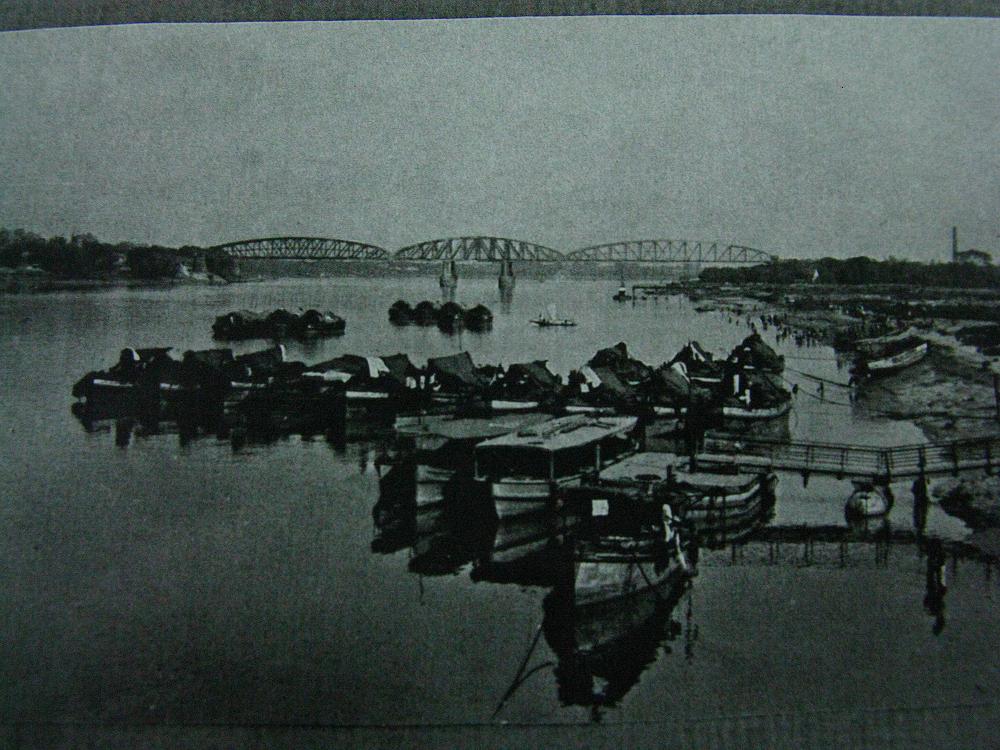
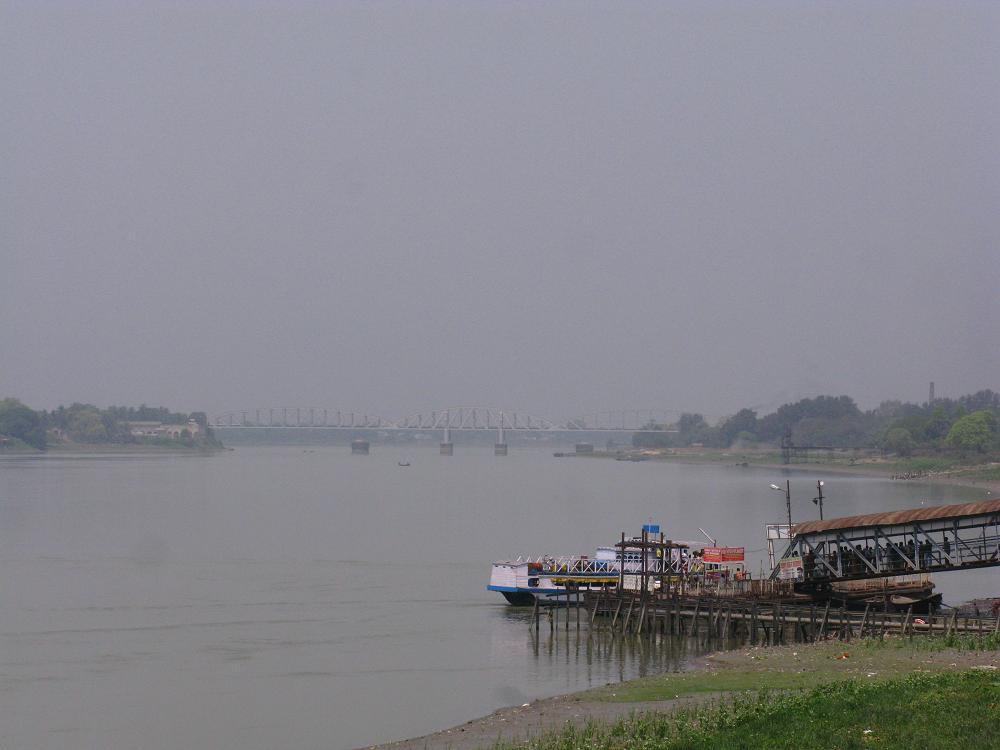
With four eager 18-year-old guides from the local village, I got what I came for. We dodged our way round some guards to see some of the buildings, climbed on walls to see others, and even managed to take an updated photo of the bridge over the River Hooghly that I had always been fascinated by. It was a hoot. In baking heat.

Since then (two days ago), I have been enjoying Calcutta at leisure, soaking up the deep Bengali cultural heritage while walking the streets, meeting with a former Indian MP now a Christian Missionary, visiting Mother Theresa’s resting place, and taking in the amazing film “Firaaq”. (It’s an intensely human take on the 2002 Gujarat riots, and I would highly recommend it). I have got so used to following Indian language films through the facial expressions alone that I don’t know what I’ll do when I see an English one again.

[Click here to read about tracing my grandfather’s footsteps through Sikkim]

Leave a comment

Filed under 'mind the gap' journey 08-09, All posts, India '08-'09, North India

Meanwhile, in Calcutta… (Finding my Roots – Part Deux)

At the moment that my mother was being born in Shimla in North-West India, my father was a 4-year-old boy on the other side of the country in Calcutta, Bengal.

Three brief paragraphs of background will help.

Background

My paternal grandfather had left the UK in 1920 (at the age of 21) on a steamer to work for one of the Managing Agencies in Tea and Jute. My grandmother (who he had met at University) then came out to marry him in 1927; my father was born in 1931. My father left India with his mother in 1936 bound for school in Edinburgh, but my grandfather stayed on till 1948, before retiring to St Andrews. He died in 1988.

As a child I was fascinated by some type-written stories that he had left about his life in Calcutta and his travels through North India. He also left behind a beautiful leather-bound album of photographs that he put together during his (lengthy) retirement. Before I left the UK, I photocopied some of the photographs, in the hope that I might be able to trace some of this history.

Calcutta is situated at the mouth of the river Hooghly, where the waters of the great Ganges eventually spew into the Bay of Bengal after meandering across the North India plain from West to East. The city was a very valuable trading post for all the adventuring Imperial powers, and although it had lost the title of capital of the British Raj (to Delhi) in 1911, it continued as an essential city of the Empire, particularly for Jute.

Did Lyons Range really exist?

I arrived in Calcutta on Sunday, taking a ferry across the great Rover Hooghly to find my cheap hotel for the next week.

Having already located the church where my grandparents were married, I ventured into the heart of commercial Calcutta on Monday, equipped with a walking guidebook, the photographs, and a stubborn resolve.

The few type-written sheets told me that my grandfather’s office had been at “5 Lyons Range” and “2 Fairlie Place”. The final words in the type-written sheets, however, (written in 1979 at a time when the UK was suffering woes at least as bad as today) were ominous:

“In a short time, all Lyons Range was pulled down and forgotten. […] I said Good-bye to Calcutta in 1949. But as I write this some thirty years later, when business circles in the UK have little to be thankful for with inflation and shortage of jobs, I sometimes wake in the middle of the night and say to myself, ‘Did Lyons Range really exist?’”

But even though the buildings on Lyons Range have indeed disappeared, the street remains, as do the street nameplates. I spent an enjoyable few hours using my imagination to bring it all back to life, dodging the taxis, connecting all the various streets, and sneaking into some of the buildings. (I lasted longest in the Bengal Chamber of Commerce, where I managed a good 20 minutes before being unceremoniously booted out onto the street by security). Some original buildings remain; many have changed substantially. But it was wonderful to see the nameplates of the Scottish firms that ruled the roost here – McLeod & Co., Balmer Lawrie, Jardine Henderson, as well as MacNeill and Barry my grandfathers’ firm.

The Chummery

The following morning, I decided to see if I could find the two residential addresses that I had.

Arriving in Calcutta in 1921 as a single man, my grandfather chose to share rooms with three others in a house, 14 Dover Park. The house became known as “The Chummery”. (One of the other young men in the Chummery was a “Commander Maurice Bond RN” – I had high hopes that he might have had some influence on Ian Fleming’s Bond, but alas I think that is stretching things too far).

The problem was that no-one I asked could locate the address 14 Dover Park. Neither was it to be found on any maps. A street called “Dover Lane” existed in the South of the city though – and this was as good a starting point as any.

An early start, a short metro-ride, a shared rickshaw ride, and a few vague directional waves (“Go straight”) and I found Dover Lane. But even with the staff in the tiny post office, Dover Park drew blanks. A man in the queue however thought (“I cannot be certain sir”) that he might know of the place – a couple of kilometres away.

One of the nice things about this trip is that I have very little to lose, so I eagerly took up his invitation to walk with him for a while in the posited general direction. We approached a dosing rickshaw-man. “Dover Park?”

“Huh? Heh? Hah! Dover Park! Huh! Heh?” It was a strangely unconvincing reply, and followed by one of those typically drawn-out circular conversations based around street names (“Dover Park, nai?” Yes, Dover Park…” “Yes Dover park? Ha! Heh. Huh?”) Still, it was my best bet. I negotiated the princely fee of 20 rupees, and jumped in.

And then I found it. Dover Park was/is a leafy cul-de-sac in Ballygunge. Some of the buildings remain, although not Number 14. But it did not require much imagination to bring this one back to life and to see my grandfather and his chums setting out together for their mundane first jobs shuffling the Empire’s paperwork.

As always, my random hanging around looking at buildings raised the curiosity of a few others and I had new-found friends in no time. Amazingly, one man with betelnut-stained teeth was even able to fill in some of the gaps about my grandfathers’ business. In this strangest of journeys, it seemed only right to hop into a cab with him; and given the bizarre contrasts on offer in this country, I suppose I shouldn’t have been surprised that within 30 minutes I was watching a goat having its head chopped off in a live sacrifice in the Kali Temple in Kalighat. But that’s another story.

The goat was Kali’s. It was still only midday. I had one more address to find. Lyons Range and the Chummery were long-gone. But would No. 2 Lee Road, where my grandparents had lived after my father returned to Edinburgh, still exist?

To be continued…

Click here for the next post…

Leave a comment

Filed under 'mind the gap' journey 08-09, All posts, India '08-'09, North India